



Belgium’s new 3-month tolerance period: Why you must start your compliance journey now
Published on: December 5th, 2025

By Ioana Ploesteanu
Senior Product Marketing Manager
Tradeshift
About the Author
As part of the Product team, Ioana Ploesteanu partners with marketing and engineering to craft the positioning and lead user engagement strategies for e-Invoicing compliance and AI-driven capabilities.
A decisive window for companies operating in Belgium: begin your e-invoicing compliance project before January 1st to secure stress-free implementation throughout Q1 2026.
Belgium has officially confirmed a three-month tolerance period following the January 1st, 2026 go-live date for mandatory B2B e-invoicing. But this window is conditional, and only companies that can prove they’ve already started their compliance journey will benefit from it. This is the core message every enterprise should be aware of as year-end approaches.
In this article, we break down what this tolerance period means based on guidance published by Belgium’s Federal Public Service Finance (FPS Finance) on December 2nd, 2025, the key requirements of the Belgian mandate, and why beginning your compliance work in December is mission-critical. If your organization wants a smooth rollout and zero risk of penalties, your compliance project must officially start before January 1st.
And if you’re looking for a partner to support not only Belgium but your entire global footprint, Tradeshift, a Certified Peppol Access Point since 2014, is built precisely for that.
If you are a Tradeshift customer, and need to be e-Invoicing compliant in Belgium, reach out to your Customer Success Manager. If you aren’t yet our customer, get in touch here.
What the 3-month tolerance period actually means
Belgium’s Federal Public Service Finance (FPS Finance) published a highly anticipated clarification on the practical enforcement of the upcoming B2B e-invoicing mandate.
A three-month tolerance period from January 1st will be granted, but not automatically, and not to everyone.
To qualify, companies must be able to demonstrate tangible progress toward compliance before the mandate enters into force. This means:
- You cannot wait until Q1 to start your project.
- You cannot assume the grace period will cover you if no steps have been initiated.
- You cannot rely on last-minute vendor onboarding or internal approvals in 2026.
The Belgian authorities explicitly expect companies to show evidence of their compliance journey. Selecting a certified Peppol Access Point before the mandate deadline can demonstrate your progress.
In short: Only companies that can prove they acted before January 1st will benefit from the tolerance period. Everyone else risks non-compliance consequences.
The main requirements of the Belgian 2026 mandate
Belgium’s B2B e-invoicing mandate is part of a broader modernization effort sweeping across Europe triggered by the ViDA framework. While the technical basis is consistent with other Peppol-aligned countries, the Belgian model has several specific characteristics.
Here are the essential elements every enterprise must understand.
1. Mandatory structured e-Invoices for domestic B2B transactions
From January 1st, 2026, all taxable persons established in Belgium must issue and receive structured e-invoices for B2B transactions.
The structured format is mandatory, and PDF invoices sent by email will no longer be compliant.
2. Peppol as the standard exchange framework
Belgium is following the proven path of Peppol-based interoperability. This means:
- Peppol BIS Billing 3.0 will be the required standard
- Invoices must be exchanged via certified Peppol Access Points, such as Tradeshift
- Existing Peppol networks used for B2G will extend naturally to B2B
3. Domestic only, but with global implications
While the mandate applies to domestic B2B invoices, multinational companies operating Belgian entities must adjust:
- Master data
- ERP configuration
- Supplier onboarding
- Internal controls
- Peppol routing rules
- Multi-country harmonization
Most global enterprises will prefer to implement a centralized compliance layer instead of managing Belgium as a one-off project. This is one of the main reasons why choosing a global partner like Tradeshift simplifies both local compliance and cross-country standardization.
4. No Continuous Transaction Controls (CTC) model—yet
Belgium is not implementing a clearance or real-time reporting model for 2026. However, structured data and Peppol connectivity lay the groundwork for future real-time fiscalization models should the EU or local authorities move in that direction.
5. ERP and integration work should begin now
The most demanding aspect for enterprises will be technical readiness:
- Mapping invoice data to Peppol BIS 3.0
- Enabling Peppol connectivity
- Testing outbound and inbound flows for all Belgian entities
- Aligning with global e-invoicing infrastructure
- Adjusting master data and tax configurations
- Ensuring AP and AR workflows support structured invoices
This is precisely why the Belgian government wants companies to start early, and why the three-month tolerance period rewards those who do.
Why starting with Tradeshift is the smart move for global enterprises
Entering December without an e-Invoicing compliance partner in place puts your company in a risky position, especially if you operate multiple ERPs, multiple regions, or high invoice volumes.
Choosing the right solution now ensures you:
- Qualify for Belgium’s tolerance window
- Avoid rushed implementations
- Eliminate penalties and fines: €1,500 for the first offence, €3,000 for the second offence, €5,000 for further offences.
- Build a scalable foundation for future mandates across Europe and beyond
Here is why Tradeshift stands out for enterprises with Belgian operations.
Certified Peppol Access Point since 2014
Tradeshift has over a decade of operational experience running one of the world’s most active Peppol Access Points. This means:
- Proven reliability
- Mature onboarding processes
- Broad supplier adoption
- Smooth connectivity for Belgium’s 2026 mandate and all Peppol-aligned countries
A truly global e-Invoicing compliance Platform
Belgium is not the only country tightening enforcement. Tradeshift supports:
- 69 countries with e-Invoicing compliance requirements
- 12 clearance/CTC countries, including France, Romania, Malaysia, and soon Poland
- 26 languages, supporting global AP and AR teams
This global foundation is critical for companies with distributed operations, shared service centers, and multi-regional invoice flows.
A full compliance layer + an AI-powered AP Automation platform
Unlike single-purpose compliance vendors, Tradeshift combines:
- Domestic mandate compliance
- Global e-invoicing regulatory coverage
- Peppol exchanges
- AI-powered AP automation
- Supplier collaboration tools
- Real-time invoice validation and coding
This gives finance teams more than compliance, it gives them a future-proof AP platform.
Start asap, qualify for tolerance, and go live stress-free in Q1
Belgium’s newly announced three-month tolerance period is excellent news for businesses, but only for those who move now.
To secure this buffer, companies must demonstrate they’ve started their compliance journey before January 1st, 2026.
This is the moment to choose your compliance partner, launch your internal project, and ensure your Belgian entities are positioned for a smooth and risk-free transition.
Tradeshift has been a Certified Peppol Access Point since 2014, and today it is also one of the most flexible and globally capable e-invoicing compliance platforms on the market. With coverage across 69 countries, 12 clearance jurisdictions, and 26 languages, Tradeshift is the smart choice for enterprises operating in Belgium and everywhere else.
Beyond compliance, Tradeshift’s AI-driven AP automation makes it a powerful platform for any finance department looking to modernize, streamline operations, and prepare for the future of digital tax.
If you’re already a Tradeshift customer, the heavy lifting is done. You’re prepared for the upcoming changes without needing extra systems, costly change programmes, or disruption. Simply reach out to your Customer Success Manager.
If you’re not yet a Tradeshift customer and need to be e-Invoicing compliant in multiple countries besides Belgium, now is the ideal time to start the conversation. Tradeshift offers a future-ready, compliant, and scalable platform that helps finance teams modernise with confidence.
Start your compliance journey with Tradeshift today, and connect to Peppol stress-free in Q1.
Are you a smaller business with Belgium only as a scope? Babelway might be a better option for you.
You may also be interested in
Reducing your compliance risk
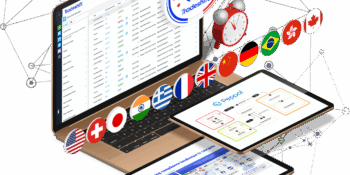
We provide e-Invoicing compliance across 69 countries, 12 clearance jurisdictions, and 26 languages.

7 Crucial Things to Know About Peppol
This webinar will walk you through 7 crucial things to know about Peppol, providing a clear, practical overview of how it works, where it’s being adopted, and what it means for your compliance and e-invoicing journey.

Why EU businesses can’t ignore e‑Invoicing anymore
All signs point to one message: e‑invoicing is inevitable. The EU’s ViDA directive mandates that digital invoicing becomes the default across the bloc. Countries are already phasing in national mandates (France, Belgium, Poland, Romania, Germany, Spain), and from 1 July 2030, intra‑EU B2B transactions must use structured e‑invoices.

Belgium’s B2B e-Invoicing mandate: The countdown to January 2026
For project managers, tax managers, and IT specialists, the looming deadline means it’s time to act. The good news? This transition can be a catalyst for greater efficiency and a more resilient financial workflow. This article breaks down the key requirements, looks at what’s coming next, and explains how Tradeshift, a certified Peppol Access Point and a key partner in Belgium’s e-invoicing infrastructure, can help you get compliant and unlock a competitive advantage.