A specialist chat agent in Tradeshift’s Reporting & Analytics app that flags fraud and financial risk while there’s still time to act
The AP Auditor Agent is a specialist chat agent built into the Premium tier of Tradeshift’s Reporting & Analytics App. Unlike the dashboards and reports, which come ready to use out of the box, this is a premium capability you shape around your own AP process: it reads your documents, learns your thresholds, and adjusts to how your team actually works. It’s designed to catch invoice anomalies and financial risk early enough that someone can actually do something about it, rather than finding out during an audit weeks or months later.
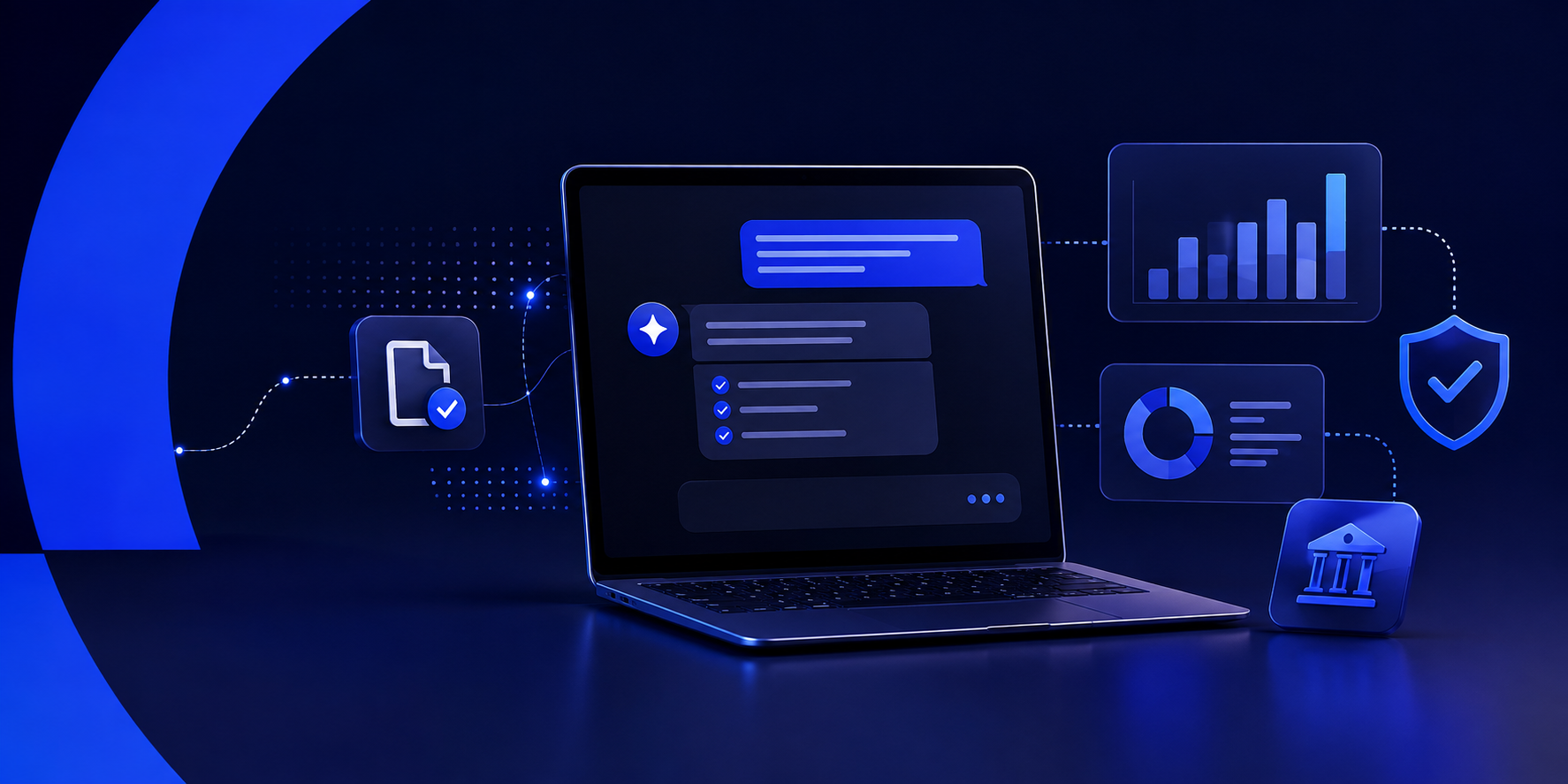
You ask it a question in plain language, something like “show me invoice CAML2603642631” or “flag anything paid but unconfirmed,” and it answers using live data pulled straight from the platform. In one example we use internally, that single prompt returns the full document record in seconds: document type, direction, issue date, unified status, net and tax amounts, including a status like PAID_UNCONFIRMED, which is exactly the kind of thing you’d want flagged before it gets forgotten.
What used to take a search through the Document Header-Level Report, a cross-check against a purchase order, and a message to someone on the AP team now takes one sentence.
How it works
The agent runs on the Tradeshift MCP Server, the same infrastructure we wrote about when we first connected Amazon Quick to accounts payable. A few things make it behave like an auditor rather than just a search bar. It reads reference documents you give it, things like internal policies, approval thresholds, and anomaly detection playbooks, so its judgment reflects your rules instead of a generic idea of what irregularities look like.
It always works off live platform data, not a snapshot from the night before. And when it acts, whether that’s flagging an invoice, placing a hold, or escalating a supplier bank detail change, it can only do what the person asking is already allowed to do. The platform decides what each role can and cannot do, and the agent works inside those same limits.
Built for analyzing, interpreting and acting
Buyers already have access to an Anomaly Detection dashboard that flags high value documents outside expected thresholds and unusual approval workflow behavior, using six months of historical data with a 24 hour buffer to tell a real anomaly from normal seasonal variation. It’s a solid first layer, and it runs quietly in the background of every standard buyer account.
The AP Auditor Agent is built differently. It isn’t a standard feature that behaves identically for everyone. You give it your own policies, approval thresholds, and the patterns that matter to your process, and it uses those to shape every answer it gives.
Two companies running the agent can end up with it behaving quite differently, since it keeps learning from the documents and rules each one feeds it, and from how that specific AP team actually works. Instead of scrolling a dashboard hoping to spot the one row that matters, you can just ask about a supplier, an invoice, or a pattern of behavior, and the agent reasons over your live data and your own rules to give you an answer or take the next step itself.
That’s the real shift: not just from reacting after the fact to catching things early, but from a one-size-fits-all report to a solution that’s actually yours.
From the Stockholm stage to production
I demoed the AP Auditor Agent live for the first time this past May, on stage at AWS Summit Stockholm. It’s one thing to describe this on a slide. It’s another to show it live to a room of finance and technology leaders and watch them realize what a permission aware, policy grounded agent can actually do with their AP data.
If you want to see it for yourself, we recorded a walkthrough of the agent in the platform. I also posted about that first demo on LinkedIn right after the event.
The numbers behind it show how deep this goes. It draws on 11 reference documents, 9 dashboards, and 14 query topics, and can trigger 68 automated action tools through MCP, all while returning answers up to 30 times faster than the legacy reporting stack it replaced. It’s running in production today, with around 14,000 row level security rules working behind the scenes so every answer stays scoped to what the requesting user is actually allowed to see and do.
Read the engineering deep dive on the AWS Intelligence blog
We went into more detail on the architecture behind this, from Amazon Quick’s custom chat agent framework to the MCP integration that lets the AP Auditor Agent take action instead of just answering questions, in Evolving from legacy BI to agentic AI at Tradeshift with Amazon Quick, written together with our partners at AWS.
Available now, with more on the way
The AP Auditor Agent is live today for Premium users of the Reporting & Analytics App. It isn’t a one-size-fits-all report you turn on and forget. It’s a premium capability that gets configured around your own AP process and keeps adjusting as it learns more about how your company operates, so the answers it gives get more relevant over time, not less.
If identifying your invoice anomalies and financial risk are anywhere near the top of your AP team’s list of worries, this is the fastest way we’ve built so far to catch it before it becomes a loss instead of after.
Catch the next live demo at our Fall ’26 Release webinar
We’ll be demoing the AP Auditor Agent again, alongside our latest e-invoicing compliance and AI updates, at the Tradeshift Fall ’26 Release webinar on September 16.